Step 1
Annotate renewable slots

Starting from the original VQA image, REKEY marks candidate edit slots and records what each slot can support, such as adding a cup or changing the color of an existing object.
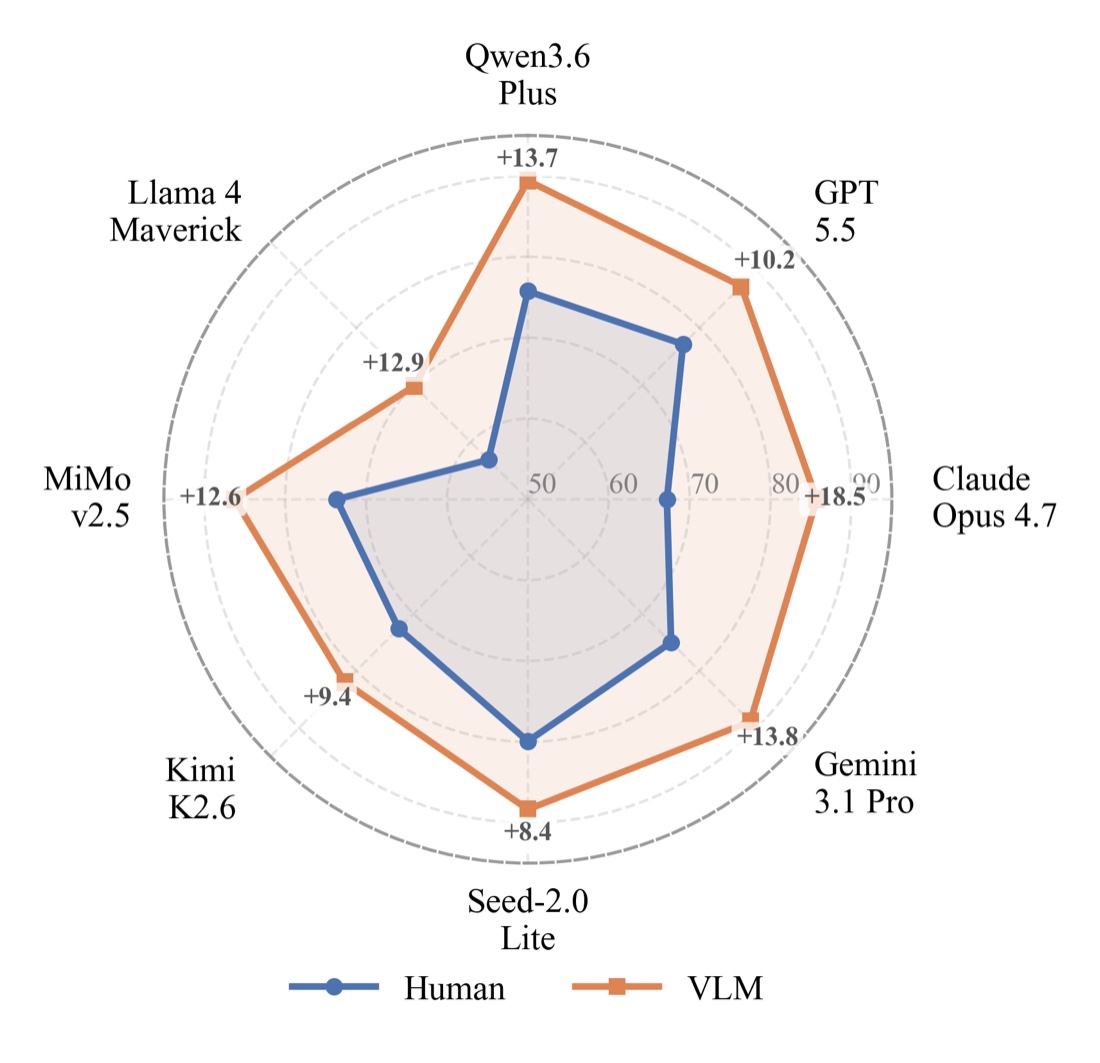
We first ask whether current VQA benchmarks are still measuring visual perception, or whether part of the score comes from memorized answer-bearing details. As a probe, we keep the original images fixed but replace the question with a fresh human-written question targeting a different visual key. If a model truly solves the image, performance should remain stable; instead, accuracy drops sharply across model families.
| Model | Original V* | Fresh Relabel V* | Drop |
|---|---|---|---|
 Qwen3.6-Plus |
90.6% | 74.3% | -16.3pp |
 GPT-5.5 |
86.9% | 75.9% | -11.0pp |
 Claude Opus 4.7 |
78.5% | 59.7% | -18.8pp |
 Gemini 3.1 Pro |
88.0% | 69.6% | -18.4pp |
 Seed-2.0-Lite |
91.6% | 74.3% | -17.3pp |
 Kimi K2.6 |
81.7% | 63.4% | -18.3pp |
 MiMo v2.5 |
78.0% | 66.5% | -11.5pp |
 Llama 4 Maverick |
61.3% | 51.8% | -9.5pp |
This consistent drop is compatible with original V*Bench scores containing benefits from memorized answer-bearing details. REKEY starts from this observation and makes the visual key renewable.
The same image is paired with a fresh question that targets a different visual key.
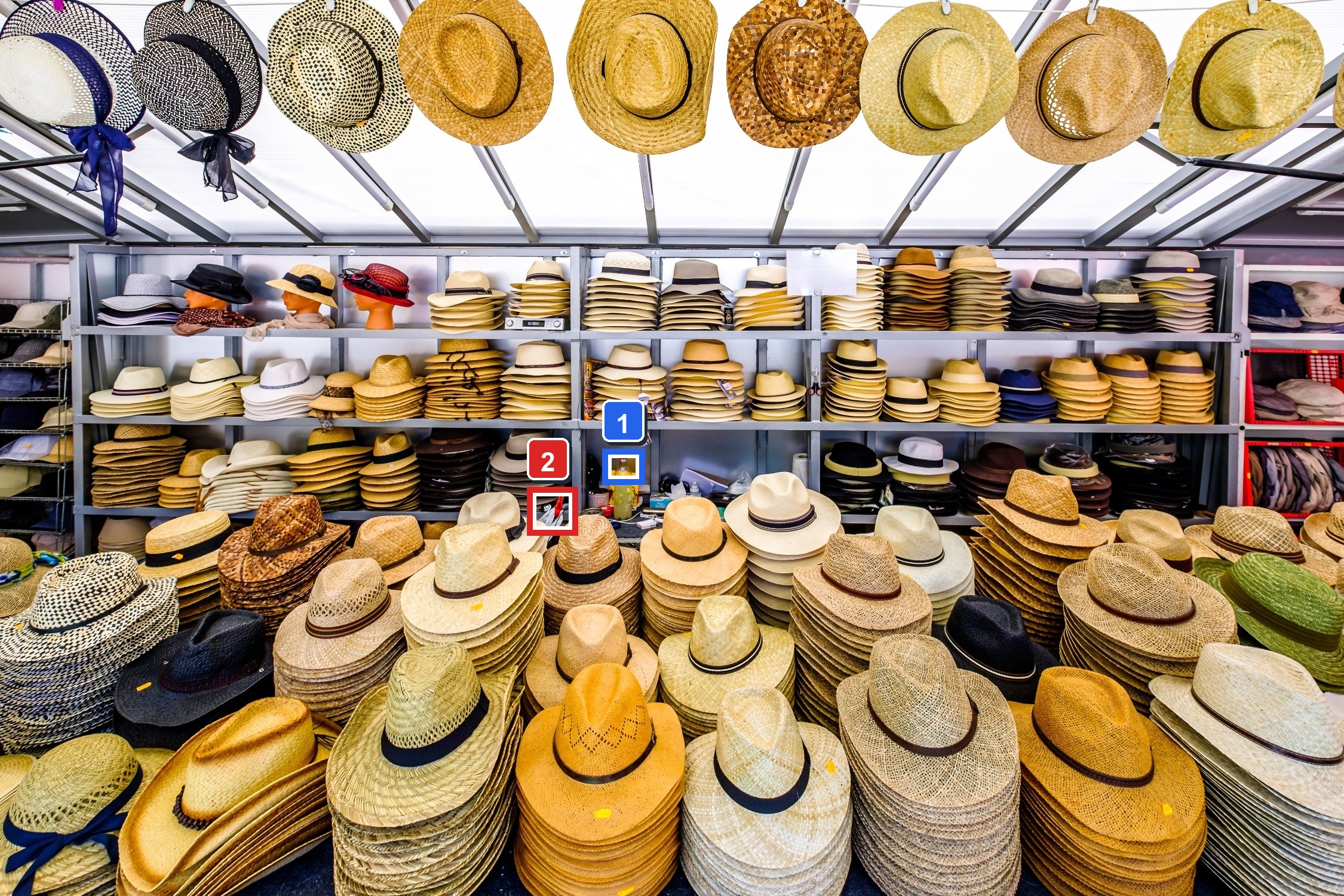
What is the color of the bottle cap?
Qwen3.6-Plus✓red
What color is the clip?
Qwen3.6-Plus✗white
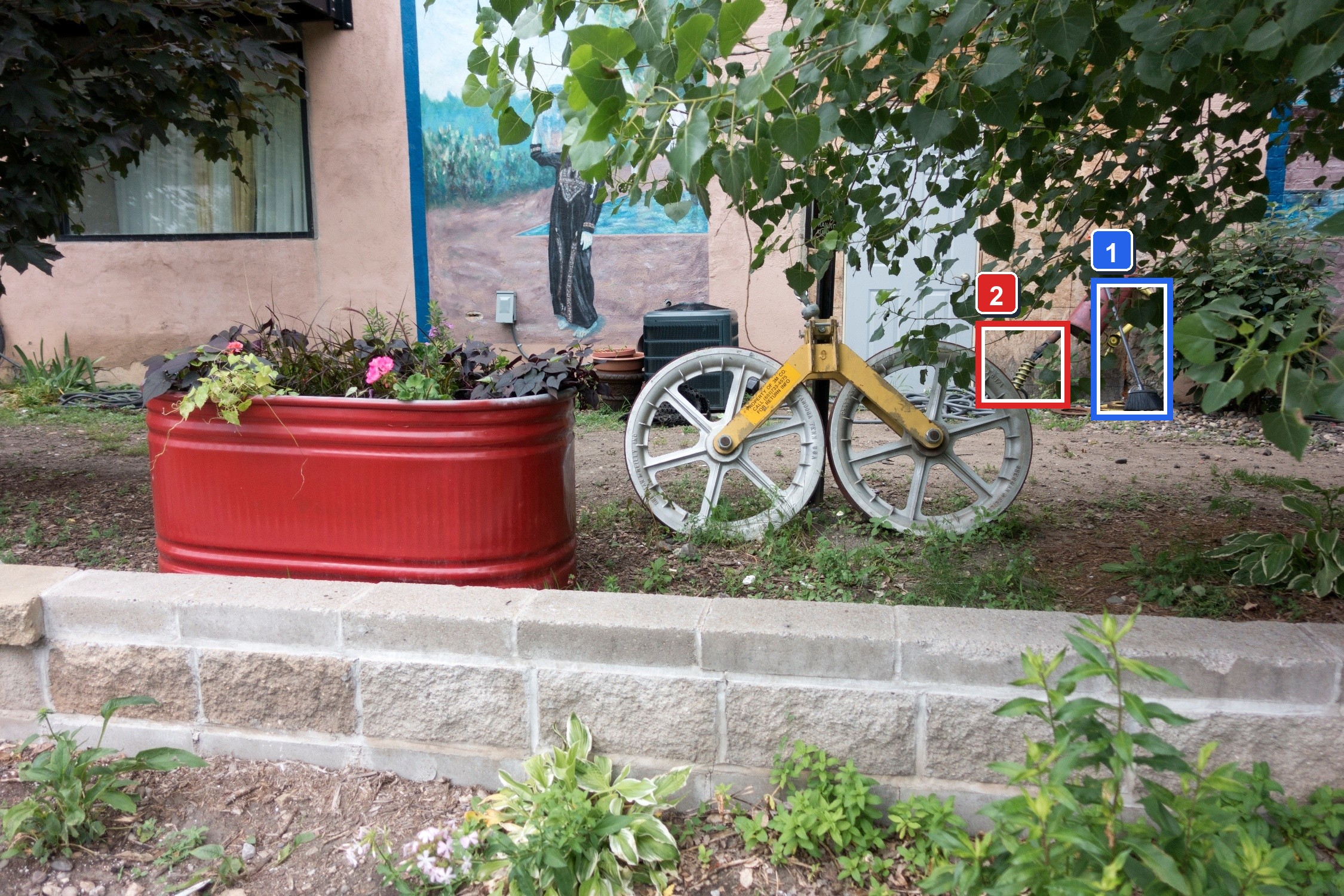
What is the color of the broom?
Qwen3.6-Plus✓black
What color is the spring?
Qwen3.6-Plus✗silver
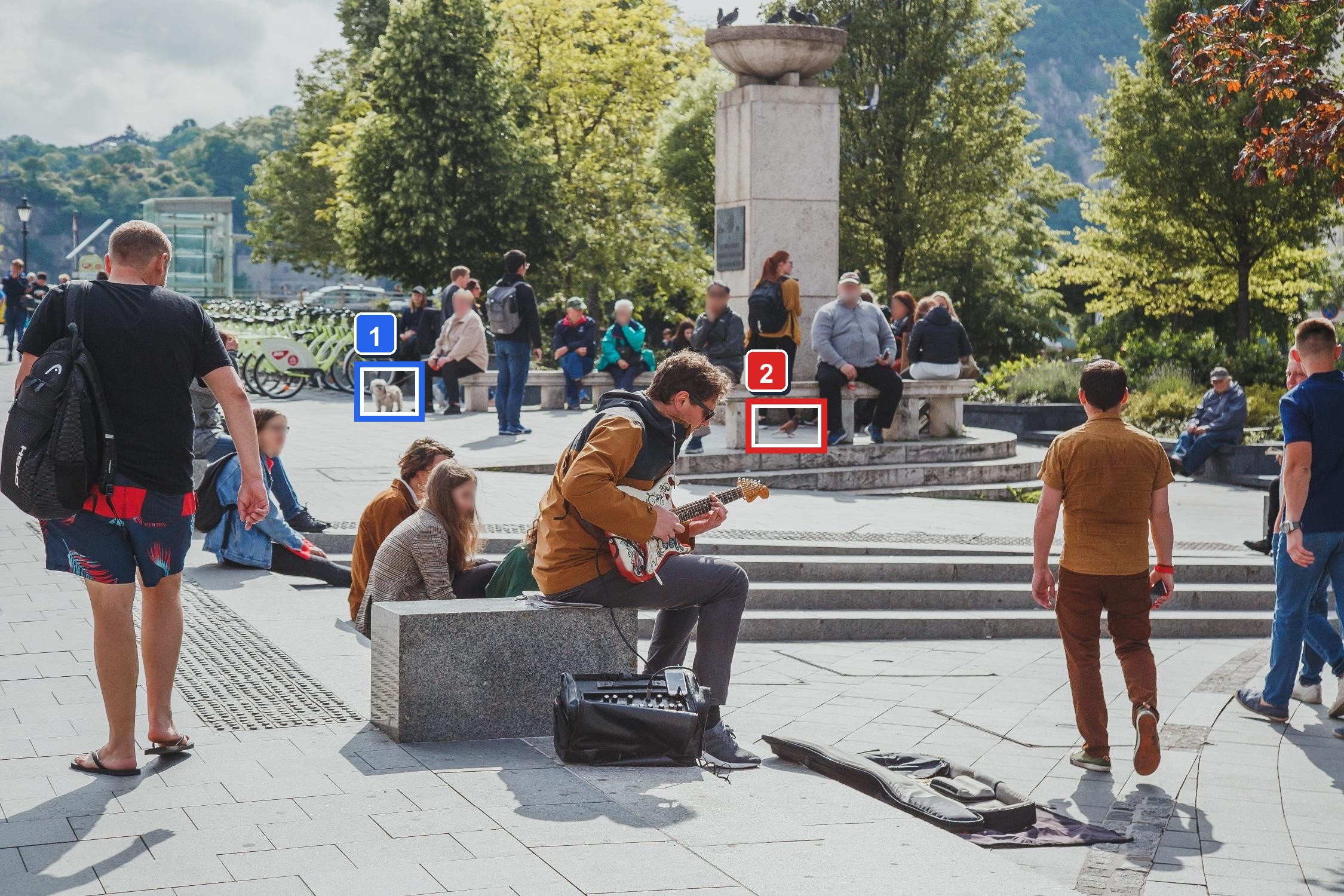
What is the color of the dog?
Qwen3.6-Plus✓white
What is the color of the bird on the ground?
Qwen3.6-Plus✗grey
REKEY does not only rewrite the question. It identifies editable visual-key slots, regenerates the local visual evidence under context, and then writes a fresh question whose answer depends on the newly generated key.
Starting from the original VQA image, REKEY marks candidate edit slots and records what each slot can support, such as adding a cup or changing the color of an existing object.

REKEY crops a larger context window around the slot, prompts a generative model to edit only the marked region, and keeps the surrounding pixels fixed.

The generated patch is pasted back into the full image, producing a refreshed benchmark item with a new answer-bearing visual key and a matching multiple-choice question.
We ask three questions: does REKEY close the contamination gap (RQ1), does it preserve V*Bench's original difficulty (RQ2), and is human annotation necessary (RQ3)?
| Model | Original V* | Fresh Relabel V* | REKEY | REKEY − Relabel≈ 0 = matches fresh questions |
|---|---|---|---|---|
| Qwen3.6-Plus |
90.6 | 74.3 | 75.7 +/-5.4 | +1.4 |
| GPT-5.5 |
86.9 | 75.9 | 77.1 +/-2.1 | +1.2 |
| Claude Opus 4.7 |
78.5 | 59.7 | 67.2 +/-3.9 | +7.5 |
| Gemini 3.1 Pro |
88.0 | 69.6 | 75.0 +/-3.3 | +5.4 |
| Seed-2.0-Lite |
91.6 | 74.3 | 79.9 +/-2.6 | +5.6 |
| Kimi K2.6 |
81.7 | 63.4 | 72.6 +/-0.8 | +9.2 |
| MiMo v2.5 |
78.0 | 66.5 | 73.6 +/-4.7 | +7.1 |
| Llama 4 Maverick |
61.3 | 51.8 | 56.9 +/-0.6 | +5.1 |
| Average | 82.1 | 66.9 | 72.2 | +5.3 |
On LLaVA-1.5-13B, position accuracy barely moves (−0.4 pp) after regeneration — REKEY preserves the visual-search structure while renewing the answer-bearing evidence.
| Setting | Overall | Attr | Position |
|---|---|---|---|
| Original V* | 48.68 | 43.47 | 56.57 |
| REKEY | 42.6 +/-2.4 | 33.2 +/-3.9 | 56.2 +/-3.3 |
| Delta | -6.1 | -10.3 | -0.4 |
A model annotator changes the task it is supposed to evaluate: its slots are easier to edit and easier to find.
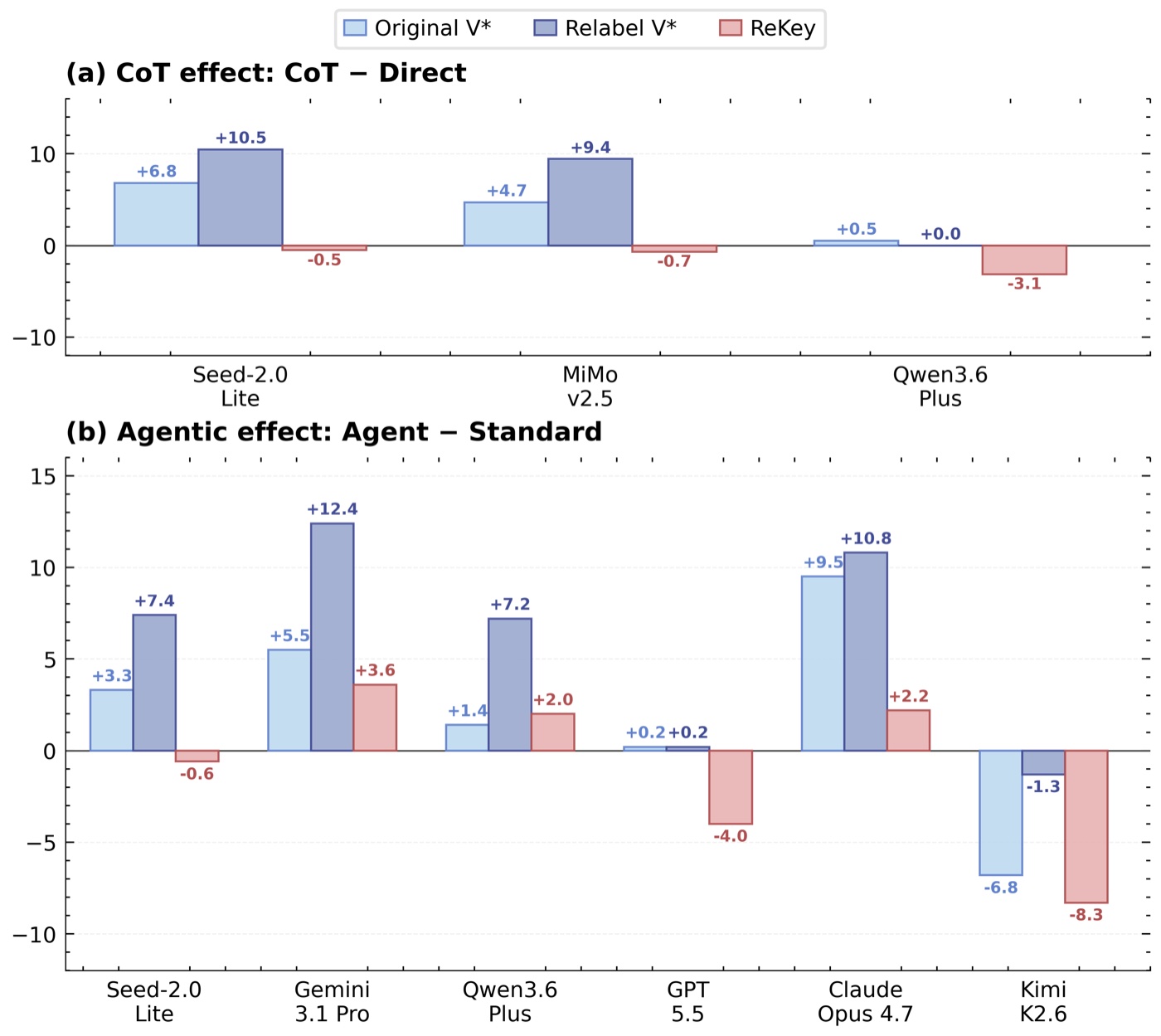
Prompting and tool use improve static variants, but their gains do not consistently transfer after visual-key regeneration.
@misc{lin2026rekey,
  title         = {REKEY: Metadata-Grounded Visual-Key Regeneration for Contamination-Resilient VQA Evaluation},
  author        = {Tengjie Lin and Yutao Sun and Jingwei Ni and Shuhan Ge and Hao-Xuan Ma and Yanting Miao and Wangyue Lu and Mingshuai Chen and Tiancheng Zhao and Jianwei Yin},
  year          = {2026},
  eprint        = {2606.20736},
  archivePrefix = {arXiv},
  primaryClass  = {cs.CV},
  url           = {https://arxiv.org/abs/2606.20736}
}